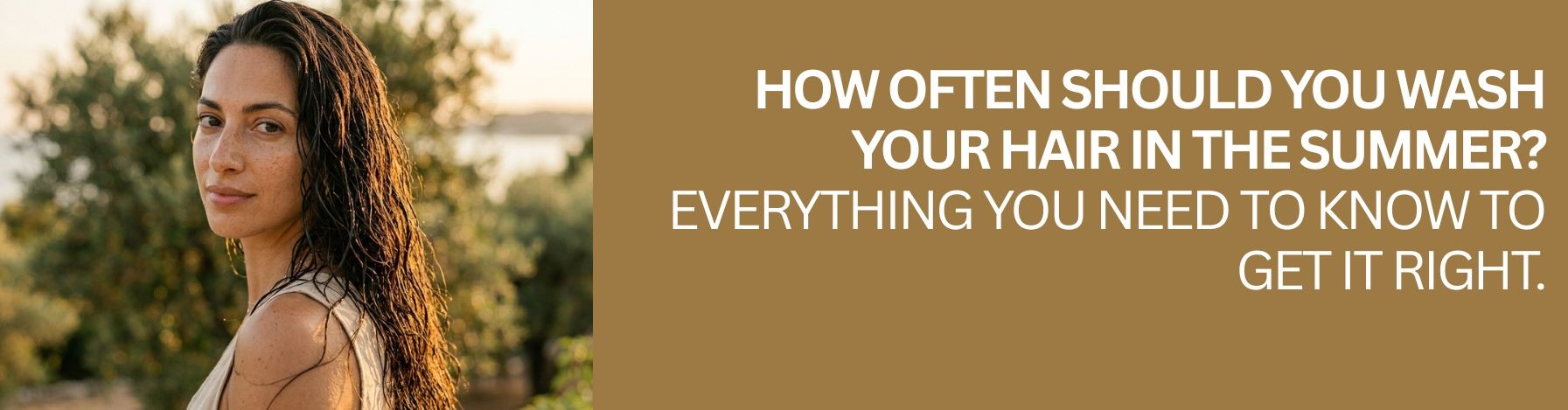
Donna con capelli bagnati all'aperto in estate — routine lavaggio capelli naturale Glam 1965

How Often Should You Wash Your Hair? The Answer No One Has Ever Really Given You

Some people wash their hair every day because it looks greasy after only a few hours. Others wash it as little as possible because they've heard that frequent washing damages hair. And then there are those who have never quite figured out whether they're doing the right thing or the wrong thing—and live with that doubt every time they step into the shower.

The truth is that both extremes can cause problems. But the real answer to the question "How often should you wash your hair?" isn't a number—it's a question you need to ask yourself first:

What type of scalp do you have?

Because the ideal washing frequency for you could be completely wrong for someone else. Understanding the difference can change everything—not only the health of your hair, but also how much oil your scalp produces, how well your hairstyle holds, and even how you experience seasonal hair shedding.

First of All: What Happens When You Wash Your Hair?

Every time you shampoo, you remove sebum, product buildup, dead skin cells, and environmental impurities from the scalp. So far, so good—that's exactly what shampoo is supposed to do.

The problem begins when you wash too frequently using harsh products. The scalp loses not only excess oil but also the "good" sebum that naturally protects its hydrolipidic barrier. How does the scalp respond? By producing even more oil to compensate.

The result? Hair that seems to get greasy faster and faster—a vicious cycle that feeds itself.

On the other hand, washing too infrequently allows oil, dirt, and dead skin cells to accumulate, clogging follicles, creating an environment that favors bacterial growth, and potentially accelerating hair loss. Waiting too long between washes isn't the solution either.

The Myth to Debunk: Is Washing Your Hair Every Day Bad?

Not necessarily.

Daily washing can be perfectly fine—as long as you use a gentle shampoo formulated without harsh surfactants such as SLS and SLES, and avoid aggressively scrubbing your scalp during washing.

The problem isn't frequency itself. It's the combination of frequent washing and the wrong products that causes damage.

With a gentle organic shampoo formulated to respect the scalp's natural balance, even daily washing can be sustainable for certain scalp types.

How Often Should You Wash Your Hair Based on Your Scalp Type?

Oily Scalp: More Frequent Washing, but With the Right Product

If your hair becomes greasy and heavy within 24 hours of shampooing, you most likely have a scalp that overproduces sebum.

In this case, washing frequently isn't the problem—it's part of the solution, provided you use sebum-balancing products that help regulate oil production without stripping the scalp.

Recommended frequency: Every 1–2 days.

Common mistake: Using harsh shampoos because they seem to "clean better." In reality, they often stimulate the scalp to produce even more oil, making the problem worse.

Detoxina D1 Organic Sebum-Regulating Shampoo is specifically formulated for this purpose. It deeply cleanses while helping regulate sebum production without disrupting the scalp's hydrolipidic barrier. AIAB-certified and free from petroleum derivatives and harsh surfactants.

Dry or Sensitive Scalp: Fewer Washes, More Hydration

If your scalp feels tight, itchy, or irritated after washing, it is likely dry or sensitive.

In this case, washing too often removes the limited protective sebum your scalp produces, leaving it even more exposed and reactive.

Recommended frequency: Every 3–4 days using lukewarm—not hot—water.

Common mistake: Assuming that "regular" shampoos are suitable for everyone. A dry scalp needs cleansing that nourishes while it cleans.

Hidrata H1 Organic Hydrating Shampoo cleanses without stripping moisture and helps hydrate the scalp from the very first wash. It is also ideal for people with dry hair throughout the lengths.

Dandruff-Prone Scalp: Consistency Is Key

Many people believe dandruff should be treated by washing hair as little as possible.

The opposite is true.

Delaying washes allows dead skin cells and excess oil to build up, worsening flaking. Consistency is essential, as is choosing a shampoo that addresses the underlying cause rather than simply masking the symptoms.

Recommended frequency: Every 2–3 days on a consistent schedule.

Purifica F1 Organic Anti-Dandruff Shampoo combines purifying action with scalp-friendly cleansing, without the harsh surfactants that often further irritate an already inflamed scalp.

Curly Hair: Less Shampoo, More Nourishment

Curly hair has a structure that naturally slows the distribution of sebum along the hair shaft. As a result, lengths often become dry even when the scalp is normal or oily.

Washing too frequently can increase dryness and frizz.

Recommended frequency: Once or twice per week using nourishing products that moisturize without weighing curls down.

Other Factors That Influence the Right Washing Frequency

Besides scalp type, several other factors can affect your ideal routine:

  • Exercise and heavy sweating — after a workout, rinsing with water may be sufficient without using shampoo every time.
  • Urban living and pollution — airborne particles accumulate on the hair and may require more frequent washing than in cleaner environments.
  • Seasonal changes — during spring and autumn, the scalp often becomes more reactive and may require adjustments to your routine.
  • Colored or chemically treated hair — frequent washing can accelerate color fading and place additional stress on already weakened hair fibers.
  • Styling products — gels, hairsprays, and waxes build up on the scalp and require more regular cleansing.

Are you Washing Your Hair Too Much or Too Little

Your scalp sends clear signals—you just need to know how to read them.

You May Be Washing Too Often If:

  • Your scalp feels tight or itchy after shampooing.
  • Your lengths feel dry and your ends break easily.
  • Your hair seems to get greasy faster than it did a few months ago.

You May Be Washing Too Infrequently If:

  • You experience itching or discomfort between washes.
  • You notice increased dandruff or flaking.
  • Your hair feels heavy and lacks volume, even shortly after washing.

Frequently Asked Questions

Does Washing Your Hair Every Day Cause Hair Loss?

No, provided you use gentle products.

Hair shedding during washing is completely normal—you are simply removing hairs that have already entered the natural shedding phase. Problems arise only when harsh shampoos repeatedly stress the scalp and follicles over time.

s It True That If You Wash Your Hair Less Often, Your Scalp Will Eventually Produce Less Oil?

Partially.

The scalp can gradually adapt and produce slightly less oil over time, but this process takes weeks and works only when there is no strong genetic predisposition to excessive sebum production.

For naturally oily scalps, simply waiting longer between washes is unlikely to solve the issue.

Does the Order of Shampoo and Conditioner Matter?

Yes.

Shampoo should always be applied to the scalp and massaged gently with your fingertips—not your nails.

Conditioner should be applied to the mid-lengths and ends, avoiding the roots to prevent heaviness.

A final rinse with cool water can help seal the cuticle and enhance shine.

Not Sure What Type of Scalp You Have?

Take our Hair Test.

In just a few minutes, you'll discover your scalp's specific needs and receive a personalized haircare routine featuring the AIAB-certified natural trichological products best suited to you.

→ Discover Your Personalized Routine with the Hair Test

Product added to wishlist

Product guide


Offers


Go to cart


Your account

Newsletter